Wishes of Thanksgiving 2025 — A Future of Abundance

Dear friends and family…

Amid all of the headline noise, this Thanksgiving, I have been reflecting on how gratitude is not only about looking back at what brought us here—but also about standing on the verge of what we are about to build.

We are witnessing a rare, pivotal moment where several technological revolutions are converging. Individually, they are impressive; however, their simultaneous and compounding nature is accelerating change at an unprecedented rate, unleashing the greatest expansion of human potential in history:

Generative AI is becoming the world’s most patient teacher, tireless teammate, and boundless amplifier of human creativity. It helps us write, design, untangle problems, spot hidden patterns, and free ideas that once felt locked away by years of experience. When knowledge flows this freely, everyone’s horizon lifts.

Robotics is stepping out of factories and into daily life. Soon, machines that can see, grip, walk, and reason will shoulder the dull, dangerous, and back-breaking tasks—giving us space to pour our energy into work that calls for judgment, care, and imagination.

Biotech is moving from merely treating sickness to creating health. We’re learning to read, edit, and program biology with the same precision we use to write software—unlocking longer lives, medicine tailored to each person, and prevention that stops disease before it starts.

Materials science is quietly reshaping the world around us. From ultra-strong composites to programmable matter and earth-friendly materials, we’re inventing substances with properties nature never dreamed of—and crafting them sustainably.

Quantum technologies are expanding the frontier of what can be computed, secured, simulated and created. Challenges once labeled “impossible”—folding proteins, modeling climates, securing data—are coming into reach, fueling leaps in drug discovery and personalized therapies.

Energy innovation is moving us toward a world where power becomes clean, abundant, and nearly free.

Solar, fusion, advanced geothermal, massive storage—together they’re ushering in an era where energy stops being the bottleneck of progress.

The future is not something that happens to us; it’s something we get to build.

But gratitude also invites humility—and honesty.

As with every technological transition—steam engines, electricity, the internet—the gains don’t come without challenges. We will need to navigate new ethical questions, reskill workers, redesign systems, reinforce trust, and ensure that prosperity is widely shared.

Progress is not automatic; it is earned thru deliberate, daily choices.

“You do not rise to the level of your goals. You fall to the level of your systems” as James Clear (one of my favorite authors, Atomic Habits, Mastering Creativity, etc) reminds us. The most effective way to improve is not to focus on the desired output (the goal) but on the input (the system). By fixing the inputs—the small, consistent actions we take every day (the outputs will take care of themselves) — or, as our friend and former Michigan Governor Rick Snyder shared thru his Matra of “Relentless Positive Action”; focus on the process, not just the outcome. And along the way, learn something new every day.

If we want a future that is abundant, fair, and human-centered, then Thanksgiving is a perfect moment to recommit to the systems that will get us there:

  • Stay curious to pull us toward possibilities
  • Learn continuously to adapt as the world changes
  • Build tools that elevate humanity rather than push it aside
  • Design technologies that expand access, not concentrate it
  • Find courage to experiment, iterate, and improve
  • Support one another through uncertainty and change

This is the mindset behind every moonshot: bold dreams rooted by consistent daily positive actions.

So, this year, my gratitude runs deeper than achievement. I’m thankful for possibility. For the innovators who lose sleep over breakthroughs. For the builders who show up at dawn. For the caregivers, teachers, and quiet problem-solvers who keep the world turning. For an age when exponential tools are slipping into everyone’s hands.

And above all—amid the noise—I’m grateful for you: the family who laughs through the chaos, the friends who listen without judgment, the colleagues who choose to hope over cynicism. May you face tomorrow with open hearts, curious minds, and generous spirits.

Here’s to a Thanksgiving brimming with abundance—and to a future we’ll build together, brighter than any present we’ve yet known.

With warmth and hope,

Happy Thanksgiving!

Posted in Gratitude, Thanksgiving | Tagged , , , , | Leave a comment

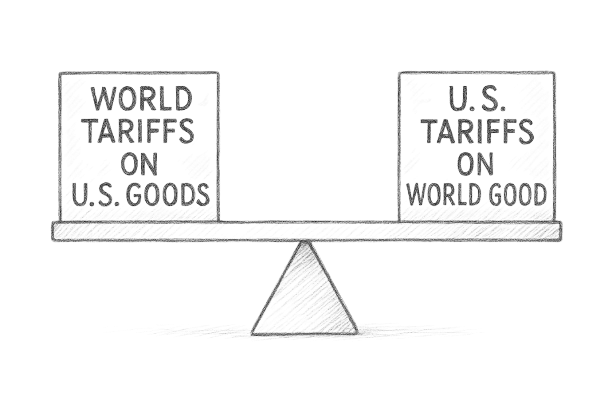
Balancing Fair Trade: The Impact of Tariff Policies

The current image has no alternative text. The file name is: chatgpt_image_apr_3__2025__11_16_47_am-removebg-preview.png

Historical Context

For decades, many countries imposed tariffs to limit US exports. Developing nations did this to grow their economies, while developed European countries aimed to protect their manufacturing industries. Meanwhile, the US maintained an open economy, becoming the world’s primary consumer. American consumers enjoyed buying inexpensive foreign goods, often overlooking the impact on domestic manufacturing. As a result, the manufacturing sector’s share of the economy dropped from 17% in the 1990s to about 11% today. Given the economy’s average size of nearly $17 trillion during this period, this decline equates to a $1 trillion loss for manufacturing and has squeezed America’s middle class. Consequently, economic activity has shifted towards the service sector, driven by the purchase of cheap imported goods.

Understanding the Impact of Unbalanced Tariffs

Concerns are rising regarding the economic disruptions caused by tariffs, raising critical questions: But what happens if we do not reciprocate tariffs imposed by other countries that tax our exports while subsidizing their domestic goods? Are we indirectly subsidizing their economies, and what are the long-term ramifications? Does this destroy what makes America great?

In today’s interconnected global economy, international trade significantly influences national economic health. When trading partners impose tariffs on our goods and we fail to respond appropriately, the consequences can be profound. Tariffs used strategically and cautiously can address specific inequities without sacrificing America’s core strengths—innovation, productivity, and openness to global trade. Excessive or overly aggressive tariff policies, however, may inadvertently harm those very attributes that have driven America’s global economic leadership. Here, I try to explore both short-term and long-term effects of unbalanced tariff policies.

Short-to-Medium Term Effects

  1. Increasing Trade Deficits

Unbalanced tariffs typically result in a rise of imports relative to exports, widening the trade deficit. As imported goods become cheaper and more appealing, domestic businesses risk losing crucial market share.

  1. Industry Decline and Job Losses

Local industries, especially manufacturing sectors that compete directly with tariff-free or lower-cost imports, can face reduced profitability, closures, and workforce reductions. This leads to increased unemployment and economic hardship in affected communities.

  1. Reduced Global Competitiveness

High foreign tariffs limit market access for domestic producers, undermining incentives for innovation and productivity improvement. As a result, domestic companies may struggle to remain competitive globally, risking economic stagnation.

  1. Dependence on Foreign Imports

Unchecked import growth, particularly in strategic sectors such as technology, healthcare, and defense, creates vulnerabilities. Over-reliance on external sources for critical goods compromises national security and economic resilience.

Long-Term Implications

  1. Erosion of Domestic Industry

Persistent trade imbalances can lead to irreversible damage to domestic manufacturing and service industries, significantly weakening overall economic stability and strength.

  1. Loss of Technological Leadership

Restricted access to international markets inhibits innovation. Countries imposing high tariffs can achieve technological dominance, limiting competition and reducing future economic opportunities for others.

  1. Weakened International Negotiating Power

Tolerating ongoing trade imbalances diminishes a country’s leverage in future trade negotiations, signaling vulnerability and potentially inviting further inequitable treatment.

  1. Economic and Political Instability

Sustained economic imbalance fuels public dissatisfaction and protectionist sentiments, possibly contributing to political instability. Chronic trade deficits can also expose economies to wider vulnerabilities, currency volatility, and decreased resilience against economic downturns.

  1. Declining Economic Growth and Living Standards

The cumulative impact of job losses, industrial decline, and stifled innovation can result in wage stagnation and reduced employment opportunities. Ultimately, these issues lead to a lower national standard of living.

Strategic Considerations

Balanced and proactive engagement in tariff management and international negotiations is essential to mitigate these risks. Although retaliatory tariffs should be approached with caution due to the risk of escalating trade conflicts, they can effectively protect domestic interests and encourage fairer global trade practices when used strategically.

By maintaining balanced trade relationships through thoughtful tariff policies and strategic diplomatic efforts, nations can safeguard economic stability and ensure sustainable growth, benefiting current and future generations.nd ensure sustainable growth, benefiting current and future generations.

Posted in Fair Trade, Uncategorized | Tagged , , | Leave a comment

Representative Democracy on the Rocks

a Prescription for the Future

Have you ever been frustrated when you could not do anything in the face of irrational behavior? If you are action-biased like me, you might be tempted to do something that you would later regret. This is my attempt to vent my disappointment and anger at the state of our democracy and specifically the politics around it. I reference the Republican Party in this paper largely because I felt that they reflected more of my values, but these thoughts can and should cross the aisle. I am what you might have called in another era a “compassionate conservative”. Fiscally conservative yet socially liberal. Someone that believes in a fair day’s wage for a fair day’s work, the Golden Rule, rewarding good work and offering a “hand up” where I can.

Aesop’s Fable

I have an old friend that likes to share Aesop’s Fable of the “Goose that Laid the Golden Eggs”. He does so in the context of a family business, imploring that their decisions as a family should not “kill the golden goose” — along with their livelihood and family legacy. Our political class would be well to heed the moral of Aesop’s story as well.

Shades of Grey

We don’t live in a black and white world but why do politicians think that it must be? Maybe my over-simplified brain is missing something here but most of us live in a technicolor world where we have to use common sense, collaboration and compromise to live a happy life and we are much better for it. Why can’t our elected representatives actually represent us? And what ever happened to the “silent majority” and why is it still so silent?

As a “moderate” I am sick and tired of getting taken for granted, but what can we do? For one thing, we can speak up when we witness wrongs. If we don’t, we risk inadvertently endorsing that behavior. We can still love and respect people who do not share our political views. Isn’t that what a civil society is all about?

Today’s Reality

In today’s highly polarized political climate, we tend to view politicians with skepticism and mistrust. Various polls have shown that government and politicians, in general, are held in low esteem by many Americans. This lack of trust is largely due to widespread perceptions of corruption, dishonesty, and self-interest among elected officials. However, this situation also presents an opportunity to take steps towards restoring civility and rebuilding trust in government and politics.

An 8-Step Program

Let’s break this down into a few ways the Republican Party can become more representative, effective, and trusted in today’s world. I suggest that the Party should consider:

  1. Embrace a big-tent approach: Adopt a more inclusive strategy that recognizes the diversity of views among its members and the country. This could involve making space for more moderate voices within the party and avoiding the perception that there is only one “correct” way to be a Republican.
  2. Focus on policy rather than ideology: Shift their emphasis away from ideology and toward practical policy solutions. This could involve engaging in more constructive dialogue with Democrats and other stakeholders to find common ground on issues such as healthcare, climate change, and immigration.
  3. Address key issues: Emphasize their commitment to finding practical solutions to the issues facing the country, rather than focusing on ideology or partisan politics. They should be more welcoming of new ideas. They should be willing to consider new ways of solving problems and to embrace new technologies. This could help build support among voters who are more concerned with results than with political dogma.
  4. Appeal to a vision of shared values: Emphasize their commitment to values that are shared by a wide range of Americans, such as freedom, opportunity, environmental stewardship, personal and fiscal responsibility that resonates with voters. The Republican Party has traditionally emphasized social and cultural conservatism, it may benefit from finding ways to do so in a way that is more inclusive and welcoming to all Americans. While we do not necessarily agree on all of these principles, emphasizing the values that we do have in common could help build support among voters who may not identify as conservative but who share these values.
  5. Promote stability and unity: Embracing a more moderate and inclusive approach, the Republican Party could potentially promote greater stability and unity within the country. This could help reduce political polarization and foster greater trust and cooperation across party lines.
  6. Appeal to younger and more diverse voters: Work to broaden their appeal beyond its traditional base of older white voters. This could involve taking positions on issues that are important to younger and more diverse voters, such as criminal justice reform and immigration.
  7. Distance itself from extreme voices: Take steps to distance itself from extreme voices within the party that may be turning off moderate voters. This could involve calling out conspiracy theories and disinformation and making it clear that those views do not represent the party as a whole.
  8. Strengthen democracy: By promoting a more moderate and inclusive approach, the Republican Party could potentially help strengthen American democracy by promoting greater political participation and engagement among all Americans, regardless of their political beliefs or backgrounds.

Future State — The Party of Opportunity

It is worth noting that becoming more effective will require a significant shift in the Republican Party’s current strategy. Its messaging needs to emphasize unity, practical solutions, shared values, inclusivity, and the successes of moderate Republicans. Messaging that is positive and optimistic, how it can make America a better place, avoiding negative messaging that attacks its opponents or that is divisive. Become the Party of Opportunity, focusing on policies that help everyone, not just the wealthy.

I believe that this all may be necessary if the Party hopes to be relevant in an increasingly diverse yet politically divisive country. By doing so, the Republican Party could become a more effective and constructive force in American life, and in doing so, help the Party better serve the interests of all Americans and indeed our Democracy. It seems that it takes courage to put country first — success is not a zero-sum game, and that helping others succeed can also help you succeed in the long run.

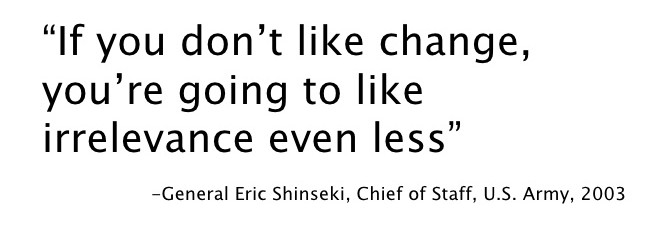
For… if you don’t like change, you will dislike irrelevance even more.

Craig T Hall

These are solely my own opinions, and no animals were harmed in the drafting of this white paper.

Posted in Uncategorized | Tagged , , | Leave a comment

The Problems with Start-up Convertible Debt

Angel InvestingImage Credit: Shutterstock.com

Convertible Debt became popularized just after the Internet bubble burst in 2001. During that early investment “winter,” many early investors were “crammed down” by subsequent down rounds (if the entrepreneurs could get any follow-on capital at all). These new investors were funding these companies at a valuation far below the pricing that had been agreed to earlier, resulting in substantial dilution to earlier investors. In a defensive maneuver, some investors began using debt instruments that would later convert into equity when subsequent, often more sophisticated, investors were able to better determine and negotiate their enterprise value. The rationale was that the early risk would be compensated thru a discount percentage at conversion when that round’s valuation was set.

In this context is the reality of today’s early stage investing. This is where typically 5 out of 10 investments lose money, 4 are the “walking dead”, with no prospect of a return, and any only 1 has any meaningful return[i]. This drives the axiom that early-stage investors can only look at opportunities that would have the potential to have a 40% IRR or 2-4X return on their investment – and why they need a portfolio of 10 – 20 or more companies (more is better) to have a real chance of success.

While there are some advantages to using convertible debt for early stage investments, I now try to avoid them for many reasons. Here are some of my thought on why.

Reasons FOR convertible debt instruments:

  • Simplicity & Speed & Low Expense. Convertible note financings are much simpler to conduct than equity. They can get done much more quickly and cheaply than priced financing rounds.  Early-stage investors want to get in quickly, get in without fuss or negotiation and don’t want their investment dollars going to legal fees.
  • Defers Pricing Decision. It can often be very difficult, if not impossible, to value an early-stage startup. What EBITDA? A convertible note structure implicitly recognizes that a fair market price for equity is difficult to determine; it allows both the company and the investors to agree on something that is fair (a discount to a future price or a warrant coverage) without the end result (who wins) being entirely dependent on a finger-in-the-air valuation determination.  By the time a company’s priced Round “A”, it is often a bit easier to value the company and price the deal.
  • Lack of Domain Expertise. While early-stage investors are often experts, they sometimes prefer to leverage the expertise of later-stage investors.  A convertible note structure allows the early-stage investors to benefit from the expertise of the A Round investors, setting the price for and negotiating the terms of preferred stock is a complicated and time-consuming process.  Convertible note financings allow investors to get in quickly, and sit back and let someone else do that work—and they can feel comfortable because they get a built-in discount or warrant coverage that the next round investor does not have.
  • Safety. Convertible Notes are perceived as safer with protection from down rounds, at least by investors in the next round. (The only real protection from subsequent down rounds is negotiating the appropriate valuation at the time of your investment.)
  • Preference. In the case of failure or early liquidation, debt holder investors are “ahead” of all shareholders. (But what is the value at that point anyway?)
  • Cost. Legal costs for investing via a debt instrument are generally much lower than for an equity investment, particularly compared to a preferred equity round.

Reasons AGAINST convertible debt:

  • Time Bomb. Convertible notes can be ticking time bombs: if the maturity date is reached, and there hasn’t been a Series A round (triggering the automatic conversion of the notes into shares of preferred stock), there is the potential for disaster.
  • Lack of Alignment. Misalignment of equity with the entrepreneur. It is clearly in the investor’s best interest to eventually convert at a low valuation, while entrepreneurs wish to see conversion at a higher valuation.
  • Debt vs Real Equity. Convertible Debt financing shows up as debt on the company’s Balance Sheet even though the investor most likely is investing with the intent to have it convert to equity.
  • Lack of Security. Most of the early-stage convertible note financings that are done involve unsecured (usually also subordinated) convertible notes. These notes do not have a security interest and the investors do not have a right to seize the company’s assets, even if there was value with them.

“When angels make a lot of money from a deal, it’s not because they invested at a valuation of $1.5 million instead of $3 million. It’s because the company was really successful”. – Paul Graham, one of America’s premier angel investors and a founder of YCombinator

  • Low Success Rate. Since early-stage investors lose money on 50% of deals and make 75% of their ROI on only 7% of them, this means that angel and early-stage investors can only afford to bet on potential home runs.
  • Low Risk Premium. Downside protection at the expense of ROI just doesn’t make sense.  Convertible debt holders are lucky to enjoy a 25-30% discount off the valuation at a subsequent round.  But, in “home runs,” the valuation of the target company may have tripled in value with the angel’s money, before the subsequent investor is engaged, clearly not compensating the early investor for shouldering the most risk early in the company.
  • Downside Focus. If investor’s focus is on protection from down rounds, it implies they are focused on their downside protection at the expense of enjoying returns on that tiny fraction of deals that, in fact, provide all their ROI.
  • No Lead Investor. Many early-stage deals involve multiple investors with similarly sized investment amounts. No one really steps up and acts as a lead investor. When there’s a lead investor, current decisions (regarding terms of the deal) and future decisions (regarding stockholder voting or board voting points) are much easier to handle because there’s a lead investor who can suggest the interests of the preferred holders. But when there’s no clear major holder, it is easier to sit back than to make decisions by early-stage-investor-committee (something that can be time-consuming and, really, a painful and expensive process).

For me in the end, the disadvantages of using convertible debt in angel/early-stage deals outweigh their advantages and in the end are simple:  At exit, investors typically don’t receive enough risk premium for their risk taken and further, risk misalignment with the actual success drivers of the company.

“Convertible Equity”, a Better Alternative?

Basically, “Convertible Equity” removes the repayment at maturity and interest provisions of Convertible Debt. Additionally, Convertible Equity is “equity” that may have a lower capital gains tax benefit for investors, since it is likely classified as “qualified small business stock”.

The SAFE (simple agreement for future equity), popularized by YCombinator,[ii] is one of the most popular convertible equity vehicles and is intended in most cases to replace convertible notes; addressing many of the problems with convertible notes while retaining their flexibility.

In addition to being simpler and clearer, the SAFE was designed to facilitate the alignment of investors and founders, remaining fair and balanced to both. Many top start-up investors were consulted and positively reviewed its development by YCombinator. The result was an open-sourced instrument that is a positive evolution of the convertible note. It is a simpler vehicle for the start-up community to accomplish the same goals and reinforce investor/entrepreneur alignment while removing or at least minimizing their impediments. The features that SAFE exhibits are reflected by YCombinator here:

Features of a SAFE:

Unlike a convertible note, a SAFE is not a debt instrument. Debt instruments have maturity dates, are typically subject to certain regulations, create the threat of insolvency, and can include security interests and sometimes subordination agreements, all of which can have unintended negative consequences for startups.

Because the money invested in a startup via a SAFE is not a loan, it will not accrue interest. This is particularly beneficial for startups, but also better embodies the intention of investors, who never meant to be lenders in the first place.

As a flexible, one-document security without numerous terms to negotiate, a safe should save startups and investors’ money in legal fees and reduce the time spent negotiating the terms of the investment. Startups and investors will usually only have to negotiate one item: the valuation cap. Because a SAFE has no expiration or maturity date, there should be no time or money spent dealing with extending maturity dates, revising interest rates or the like.

A SAFE still allows for high-resolution fundraising. Startups can close with investors as soon as both parties are ready, instead of trying to coordinate a single close with all investors simultaneously.

SAFEs allow founders to focus on building a company and enables them to consummate the right investment at the right time, thus benefiting both the company and its early stage investors.

It’s all about the Equity, not the Coupon.

As investors become more sophisticated they are willing to provide more balanced terms for investment. This enables founders to focus on developing the business rather than negotiating and monitoring compliance with complex legal terms. The SAFEs simplicity and flexibility afforded is a true win-win.

As more and more investors acknowledge that many of the protections negotiated in startup Convertible Debt are of little significance in the early stage scenario, it is no wonder that SAFEs are quickly become widely used in Silicon Valley and beyond.

Conclusion.

In this world, bolder investors who willing to take on early-stage investment risk will now get appropriately rewarded with lower prices while maintaining better alignment with the founders. Maybe just as importantly, in a hits-driven business, might be that they’ll be able to get into the deals they want. Whereas the “who else is investing?” type of investors will not only pay higher prices but may not be able to get into the best deals at all.

___________________

[i] In terms of average returns, the largest and most widely-cited study was done in 2007 by Robert Wiltbank and Warren Boeker with funds from the Ewing Marion Kauffman Foundation.  That study looked at the returns of 3,097 investments by 538 angels and included data on 1,137 exits and closures.  The findings of that study were that the average return was 2.6 times the investment in 3.5 years or an IRR of 27%. https://papers.ssrn.com/sol3/papers.cfm?abstract_id=102859

[ii] YCombinator Startup Documents https://www.ycombinator.com/documents/

Posted in Uncategorized | 1 Comment

Welfare “Cliff Effect” Descrimination

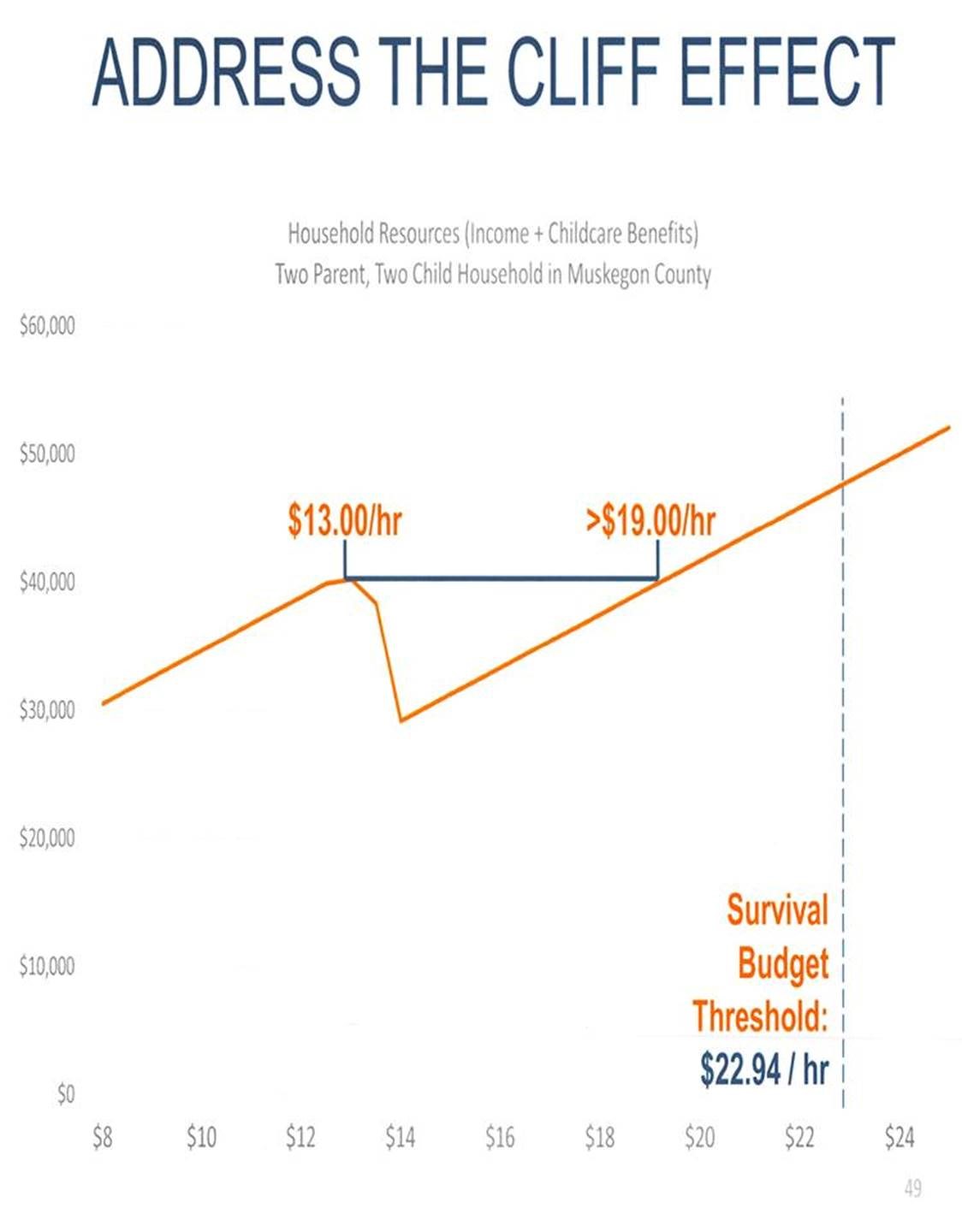
The Welfare “Cliff Effect,” occurs when employees — usually women — receive a small wage increase. That small bump in pay might push them over a financial cliff if it means their income exceeds the limit for a program such as a child care subsidy. They could lose more in benefits than they gain from the raise, trapping many in a low-wage job or just completely leave the workforce.

Welfare Cliff Effect

This challenges independence, creating a culture of dependency with a whole segment of our citizens. It also removes much needed resources and their resultant economic activity. If you don’t think that this is much of an issue, there are an estimated 110,000 people in our region alone.

The West Michigan-based Talent 2025 organization has identified 3 barriers to helping those not in the workforce find a job specifically calling out this Cliff Effect (along with job and skills development).

It seems to me that we should start by updating our welfare policies with employment policies (as successfully done in Colorado and other states). We can start by removing the Cliff and replacing it with a gradual diminution until they reach a household survival budget threshold (currently at $22.94/hr). At the same time we need to provide a path for their skills development. The path to success and self-sufficiency for these people needs help. Now, if not sooner, is a good time to start.

Posted in Uncategorized | Leave a comment

History Has Momentum

“We’ve always done it that way”. Not a good answer for sure. Perhaps it is better for them if they are the one responsible for the results in case something else happens. It seems that everybody wants change but nobody wants to change. Change can be risky after all.

Having said that, if you are not making mistakes, you are probably not making decisions either. For, if we are living today, we are in living an environment of constant change. There is no doubt, that the rate of that change is ever increasing. Nowhere is that more visible than in the startup world.

You cannot be complacent in the “corporate world” either. As I like to say, “while there is a cost of doing something, what is the cost of not doing it?” For some, it is irrelevance.

If you don't like change

I have always loved to compete with organizations that seemed to be so “hide bound” and risk adverse that they never seemed to make a decision. There never seemed to be enough data for them to decide. Letting the “other guy” go first was easier. So the result of the three deadly “C’s’ to Innovation becomes: Comfort, Contentment and Complacency. Great things never come from your comfort zone.

Outside Your Comfort Zone

This is the defensive game of “not losing”. But time waits for no one and neither may that opportunity. Therein lies the opportunity for the startup or organization with the innovative culture to help make that incumbent irrelevant. This is the game of “winning”. My experience has shown me that this happens most frequently with a change in leadership, but it can also come ironically with great success.

If you are competing against an organization that is trying to “not lose”, maybe you can help them be their change agent by making them irrelevant. Disruption tends to do that, you know. Furthermore, if you are in an organization where that game has changed “from winning to not loosing”, maybe it is time for you to move on before they too be come history.

In the end, it seems that the largest impediment to change is History itself. Don’t let the cost of “doing it” overwhelm your future. For the cost of “not doing it”, might be your own relevancy.

Posted in Disruption, Innovation, Leadership, Startup, Venture | Leave a comment

Integrity: What is your Say/Do Ratio?

IntegrityIn a recent casual conversation with a retired international senior manufacturing executive, Tony Worthington (and new friend), I heard a new concept, your Say/Do Ratio. Well, a new twist on a very old concept anyway. In the spirit of “I want to learn something new every day” (and I hope that you do as well), I feel that this term is important enough to share.

One of the earlier and most important things that I learned from my father was a close cousin to this Say/Do Ratio concept. He taught me thru his word and deeds was that “your word is your bond and non-negotiable”.  The people that I deal with know that they could take my word to the bank, almost literally. (Later in my career I was able to put together multiple seven-figure deals together with people solely on the value of my hand shake).

It is not always free. Be assured that there were many times that it cost me dearly in terms of my bank account. As a result of those deeds and others backing up my word, every withdrawal from that account that was made in defense of my word compounded in the value of the Trust that I was able to build with my associates and friends.

Trust

This basis of Personal Integrity is probably the most important attribute that you can have in your life, both corporate and personal. Doing what you say you will do seems so simple, yet so many people do not follow-up and execute on their promises. When they do not, their Say/Do Ratio is compromised and they are no longer trusted as much either.

This concept is so crucial in every area of your life and yet you might be surprised at how many people notice if your Say/Do Ratio is not 100%. Past behavior predicts your future behavior. If you always do what you say you will do, no matter what it is or what it will cost you, you will earn great trust and respect from those around you and “your word can be taken to the bank” as well.

In conclusion: if you do not really have intentions of actually doing something, do not say that you will. It is a simple as that. Be intentional about your promises and always deliver. The trust that you will build is crucial to your future success and personal brand. Make your Say/Do Ratio 100%.


Posted in Leadership | Leave a comment

How Much Money Do You Really Need?

When an entrepreneur is posed with this question by a potential investor, how do you answer it? What is the investor looking for? Does it mean that they do not believe my projections? Are they testing me for my resolve? How reliable are my numbers?

The real problem with this question, of course, is that it is not clear and can be interpreted in these and many other ways. While it is usually not a good policy to answer a question with a question (it can make it seem that you are dodging the question), you might be better off asking a follow-on question to help clarify their intent.

How about something like: “Are you interested in our plans if we are not able to reach our funding goal OR do you need more information on how we are going to use these resources to meet our milestones?”  You need to be prepared to respond to either or both.

This might also your chance to explain any alternative plans that you may have to impress upon the investor your focus on capital efficiency and the specific objectives that you are trying to reach with your additional capital.

On the other hand, as an investor, I might also be interesting in fleshing out if that amount is the full amount that you believe will be needed to drive to break-even. If not, I would need to know how much in follow-on money would be needed and if the amount you are asking for will take you to break-even — is there a smaller amount that could take you to an important milestone that might enable you to raise the remaining amount more easily?

What I am trying to do is to assess the remaining risk in your venture and if you understand that risk. Have thought thru your goals, your plan to get there (with any contingencies), your ask and how it will be used?

In the end, I need to know how our money will make a difference in your success.

Posted in Entrepreneur, Raising Capital, Startup, Venture | Tagged | Leave a comment

Mission Impossible? Supporting STEM Programs.

Mission Impossible? The President and industry groups have called on colleges to graduate 10,000 more engineers a year and 100,000 new teachers with majors in STEM – science, technology, engineering and math. Unfortunately most experts also agree that this is just a pipe dream.

It is not just a K-12 prep issue, they are losing most thru attrition. In addition, it seems that grade inflation in the humanities and social sciences also provides perverse incentives to leave STEM fields of study as well. But the the real undercurrent? It is just too hard and most universities are too rooted in the past to change (it is the old “history has momentum” problem).

As an example, most STEM University programs still make the freshman year a sink or swim experience. It is called “the math-science death march” where we have college freshmen wade through a blizzard of calculus, physics and chemistry in lecture halls with hundreds of other students — and then many wash out. Hardly a surprise.

Having graduated with an Engineering Degree from Purdue University in 1972, I can tell you that not much as changed since I experienced that “death march” myself. Our then University University President, Frederick L. Hovde, took pride in freshmen engineering orientation pointing out that the person sitting to the right and left of me would wash out. How can we afford to continue to set these expectations and dash those dreams?

While there is no doubt that these programs need a strong theoretical foundation; we can and must do a better job of introducing more practical and inspiring programming to keep the best and the brightest in STEM programs. If a student is smart enough to get into one of those programs, we need to be able to nurture and be able to keep them engaged and there. Our nation depends on it.

(And while we are at it, we also need to keep our great foreign graduates here as well. How about an automatic Green Card for them? A great topic for another discussion.)

________________
Special thanks to Christopher Drew and the New York Times in the article “Why Science Majors Change Their Minds” for the inspiration for this post.

Posted in Education | Leave a comment

One Less Crazy One

When I heard of Steve Jobs’ death last night, my first reaction was a simple “wow”. You know, the kind you get when you knew something of significance just happened. While I never had the opportunity of meeting Steve Jobs personally, I felt that I somehow knew him. He was an unknowing role model for me as he was for so many I suspect. A model of the power of entrepreneurial spirit, of one’s tenacity, vision and elegance and how one person can change the world. As Steve himself once said:

“I’m convinced that about half of what separates the successful entrepreneurs from the non-successful ones is pure perseverance.”

It wasn’t always easy either. Take for instance, his fall from grace in 1985 when he was ousted from Apple by his own board and Microsoft ascended to the world stage. The Mac became relegated as just a niche product, although much loved by graphic designers and musicians — but not for serious business work. Oh, and do you remember the Lisa Computer and Newton Tablet? But all of this helped shape him too. Failure is a strong teacher.

He went on to acquire Pixar in 1986, you know the “Toy Story” and “Cars” movie production company. And he also founded NeXT in 1988, a very sophisticated workstation company, that ironically brought him back into the Apple fold when they bought it in 1990.

He wasn’t just a magician on the stage of a new product launch or a designer of aesthetically pleasing yet elegantly simple products either. He was much more than that. He knew that great design was not just what a product may look like, it was how it worked as well.  On the iPad, he said “it’s technology married with liberal arts, married with humanities and yields the results that make our hearts sing.” And sing they have. He knew that you “can’t just ask customers what they want and then try to give that to them. By the time you get it built, they’ll want something new”.

He also had a the ability to say “no”. One of the hardest things that a leader needs to do is to decide which product or service to nurture and which to kill. He had an uncanny ability to see what the future might be and to separate the wheat from the chaff.

At one minute assailed as a bit of a hippy forever railing against big companies and then hailed by many of the same as one of the greatest CEO’s of our time — if not of all time. He was a lesson in contrasts.

One of his most powerful gifts however was the almost fanatical loyalty of his customers. It was thru them that he created the most respected technology company and later revered CEO in the world. I remember in the mid-80’s when Apple came out with their first Macintosh. We had just opened up our first personal computer store in West Michigan and Apple was just emerging as a real alternative to the Microsoft PC. To introduce their radically different personal computer (it had a graphical user interface and a single-click mouse) they rolled out a “drive-a-Mac” program to let prospective clients take it home to try it out.

At its introduction, I had our 3-year old daughter demonstrate its drawing program; cajoling our visitors that if a 3-year could use it so could they (and I still have that original computer in its original carrying case safely stored in my basement). That 3-year old is now a Doctor in her early 30’s — and is still a loyal Apple customer.

He was also an inspiration through his words. Here we have him at the 2005 Stanford University Commencement Address:

“Your time is limited, so don’t waste it living someone else’s life. Don’t be trapped by dogma – which is living with the results of other people’s thinking. Don’t let the noise of other’s opinions drown out your own inner voice. And most important, have the courage to follow your heart and intuition. They somehow already know what you truly want to become. Everything else is secondary.”

Steve Jobs’ 2005 Stanford University Commencement Address

You will hear and see much of Steve Jobs’ life and accomplishments in these next few weeks. I think that the following commercial that he narrated but never aired (the Richard Dreyfuss version did) can tell a little of his entrepreneurial spirit that helped define who he was.

The first Think Different commercial
“Here’s to the Crazy Ones”.

We will miss but not forget the legacy and vision that Steve left for us all. So… here is to the young man who once said the he wanted to “put a ding in the universe” — and he did. And here is to one less crazy one with hopes that you too will be a little crazy. Thank you Steve Jobs.

Posted in Disruption, Entrepreneur, Innovation, Steve Jobs | 1 Comment