
Elephants and Deer and Rabbits oh my… do I have to choose?
Please forgive my game animal metaphors (I have a great friend who recently got me thinking of market segmentation in this light) but I hope that you will be able to relate to them as well as we explore market segmentation and focus with (most) early stage companies.
Many companies make the mistake of trying to serve multiple customer segments early in their company’s existence. In this post I propose that most startup companies should be Deer Hunters (I will explain more on that later), but at a minimum need to look at narrowing your marketing range and hunt in one segment.
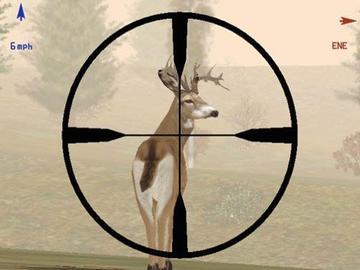 I know, it is tough not being opportunistic when it comes to sales, but this is a mistake that too many companies make. Goodness knows, I have. We all have limited resources, time, money and talent and we cannot afford to dilute them. We need to learn fast — and fail fast. (Just try to not have your failure be fatal — I have certainly shoot myself more than once and you will too if you are making decisions.) To be an effective hunter you have to know your prey, what they eat, how they move, live (and love). Focus and continuous learning is crucial.
So first let’s back up a little. One of the first questions that you need to ask yourself is who and what kind of customer you want to serve. In my experience, if you try to be all things to everyone, you will most likely be nothing for anyone (especially as a startup). Make sure you know your market and what the size of customer you want to serve in it — what the people in a company of that size do, the pain that they have, the features that will resonate and the channels that you will need to sell into and service them. Because it will vary dramatically by different segments, I believe you need to pick an animal size and go for it. I have stated my animal bias in the sub-title – but each can work for different business types. You will need to choose which is right for you.
Elephants: 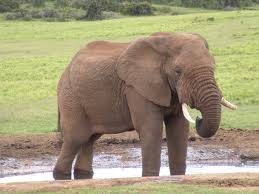 It is very tempting for many startups to hunt elephants. These are really massive customers, the Wal-Mart’s or Microsoft’s of the world. It is very tempting on many levels to be an elephant hunter — “it takes the same amount of energy to shoot an elephant as a rabbit”. Don’t be fooled. You have ten associates and are serving a business unit that might have tens of thousands. While you can certainly argue that if you manage to kill an elephant, you will be able to feed your village for a very long time; you also need to understand that elephants are extremely difficult to take down and will usually take your entire team to do so. It will also take special weaponry and even if you are able to do so, you may not be able to eat them before they crush, dictate or enslave you.
Early in our scale-up of LeanLogistics we had the opportunity to propose our On-Demand Transportation Management System to Wal-Mart. It seemed like a “make your company” opportunity. It was flattering to have the opportunity and very tempting, so we went for it.
In the later stages of our negotiations it became apparent that they did not just want the value proposition that we were selling; they wanted it all, our soul and our source code to run their own transportation marketplace for themselves. We tried what we thought was a very creative way to give them our essence without our soul — they opted to take a competitor’s soul instead. We were crushed but it was probably one of our luckier outcomes and who knows where that competitor is now?
Having said that, elephant hunting does work for some companies. Some company’s services and products are designed for large organizations from the start. We thought that our company and technology was (and it actually was as we went on to close and solve many other elephants’ transportation problems). But be prepared to live and hunt on their turf and at their scale — and be ready to face the consequences.
We were lucky and were able to keep our company, our culture and to continue to build our value proposition. If you do decide to go after elephants, by all means go for it but do not be under the illusion that you can go after rabbits at the same time. A 50 caliber elephant hunting rifle just does not leave much to a rabbit carcass. Their needs, sales channels, marketing messages (and the capital to execute them) are just too different.
Rabbits:  Rabbits, rabbits and more rabbits. They are so tasty and there are so many of them – they seem to be everywhere you turn. You chase them, but as you get closer you realize that they are quick little buggers. Have you ever tried to catch one? They scatter and get away. It will make you wonder whether they were really worth the effort to catch after all. For me, rabbits are the equivalent of having a low-end version of your product — with the promise of making it up in volume.
In the mid 70’s, my first company (Logistic Concepts) developed a light version of our robust “TINMAN” system (TINMAN was an acronym for “Total Information Manager”, an on-line Inventory/Order Management software tool that ran on HP3000 computers). We called this light version IOM (for “Inventory Order Manager”) and it was nothing but a feature stripped version of our ground-breaking product. Unfortunately, the promise of much greater sales at lower prices ending up confusing our marketing and value propositions and we eventually abandoned the effort. Scarce resources diffused and wasted.
While your sales people (if they are like mine were) tend to tell you “if you drop the price we can make more sales”, be careful. Anyone (well almost anyone) can give product away, real sales is a discovery and education process to uncover a customer’s actual needs, pain and motivation. Real salespeople assist their customers to uncover and assist them in that process, they don’t force, lie to or coerce them. Your value should be worth something to them and they should be willing to pay for it. If it is not, learn that early and move on.
Now sometimes you can build a company to focus only on low-level entry customers – Rabbits — if you can build a massively scaled business like Facebook or Twitter. Unless you can build that very large volume (and low-cost) business model, rabbits can be too deceptive, elusive and to hard to get enough money out of to survive and thrive.
Hunting rabbits is not as easy as you might think. You need too be very quick and have the right caliber weapon (or trap) to catch them and when you do they don’t have much meat — you need a lot of them to feed your village.
Deer:
 Deer are much easier to take down. You can use many different weapons and methods. When you do bag a deer they have plenty of great tasting meat on them. Deer are not so big that you can’t drag them home. They do not make huge demands on you, your resources or your company. They won’t force you to make unrealistic changes to your solution or contracts. You don’t have to worry about customer concentration if one gets away. They are worth your time going after.
When you’re a startup it is far easier to cut your teeth on companies that are not too demanding or difficult to serve, and yet can afford to pay you a fair price for your product or service. If they are too hard to work with or their demands too high, you can easily move on to the next one. They allow you to stay focused on your developing company strategy without having to compromise. Startup and early stage companies should be deer hunters.
It is up to you to determine which segment you should shoot for. With LeanLogistics we were able to land many deer and even a couple of elephants later. Now that their Transportation Marketplace has reached a critical mass they have even been able to move down-market and also offer a more self-service solution as well. The taste of a variety of game has never been better, but for your startup you have a better chance to catch a Deer before your starve.
My apologies to all my vegetarian friends — and many thanks to Mark Suster and his blog from Both Sides of the Table for the inspiration for this thread.

 Musings at Altitude