
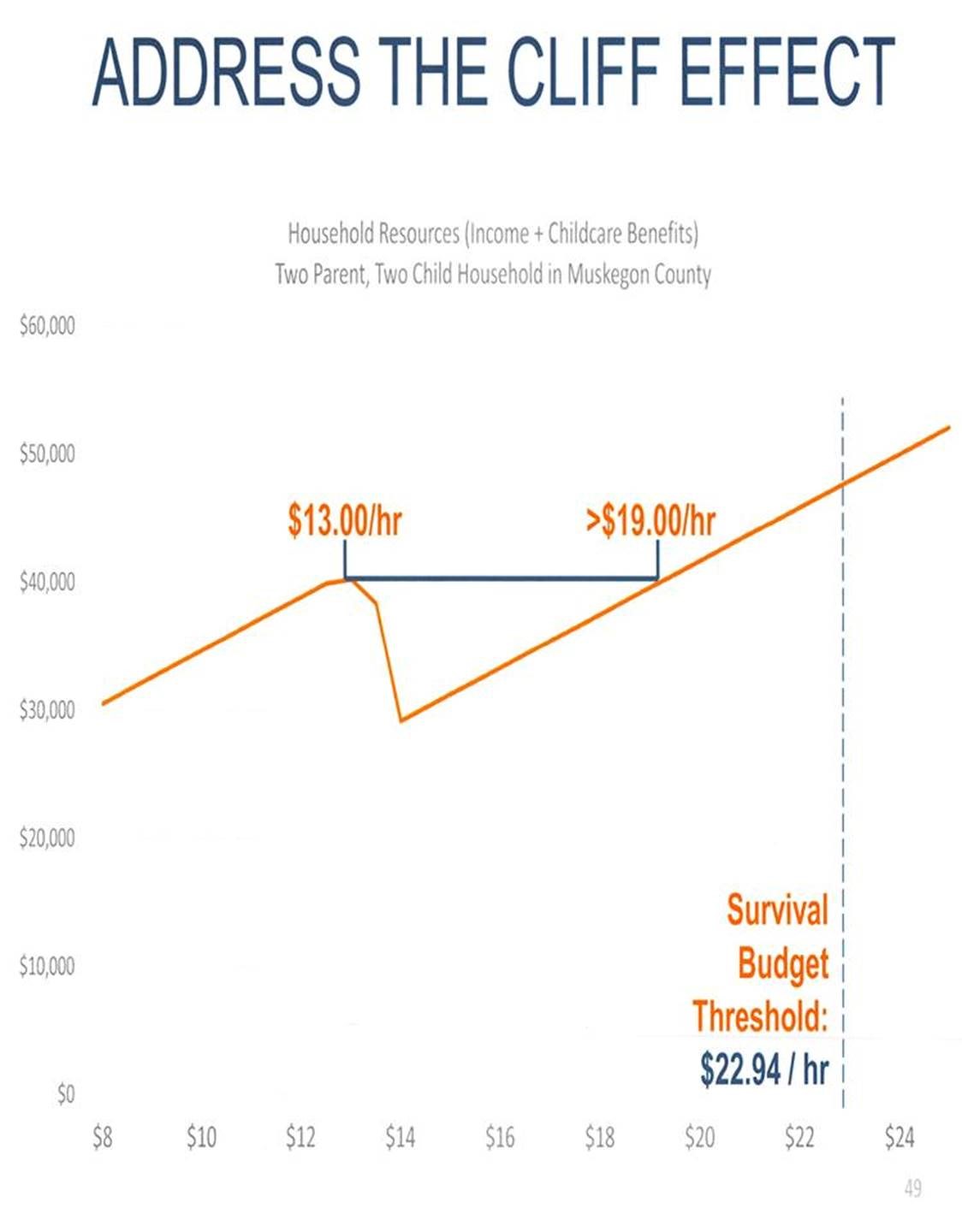
The Welfare “Cliff Effect,” occurs when employees — usually women — receive a small wage increase. That small bump in pay might push them over a financial cliff if it means their income exceeds the limit for a program such as a child care subsidy. They could lose more in benefits than they gain from the raise, trapping many in a low-wage job or just completely leave the workforce.
This challenges independence, creating a culture of dependency with a whole segment of our citizens. It also removes much needed resources and their resultant economic activity. If you don’t think that this is much of an issue, there are an estimated 110,000 people in our region alone.
The West Michigan-based Talent 2025 organization has identified 3 barriers to helping those not in the workforce find a job specifically calling out this Cliff Effect (along with job and skills development).
It seems to me that we should start by updating our welfare policies with employment policies (as successfully done in Colorado and other states). We can start by removing the Cliff and replacing it with a gradual diminution until they reach a household survival budget threshold (currently at $22.94/hr). At the same time we need to provide a path for their skills development. The path to success and self-sufficiency for these people needs help. Now, if not sooner, is a good time to start.

 Musings at Altitude